15 Ways Solar Street Lights Reduce Crime in Underserved Communities
Reading time: 8 minutes
When darkness falls in many underserved communities across Nigeria and Africa, so does the sense of security. Streets become deserted, businesses close early, and fear keeps people indoors. At Technology for Sustainability and Safety Initiative (TSSI), we’ve witnessed firsthand how something as simple as solar-powered street lighting can transform entire communities and dramatically reduce crime rates.
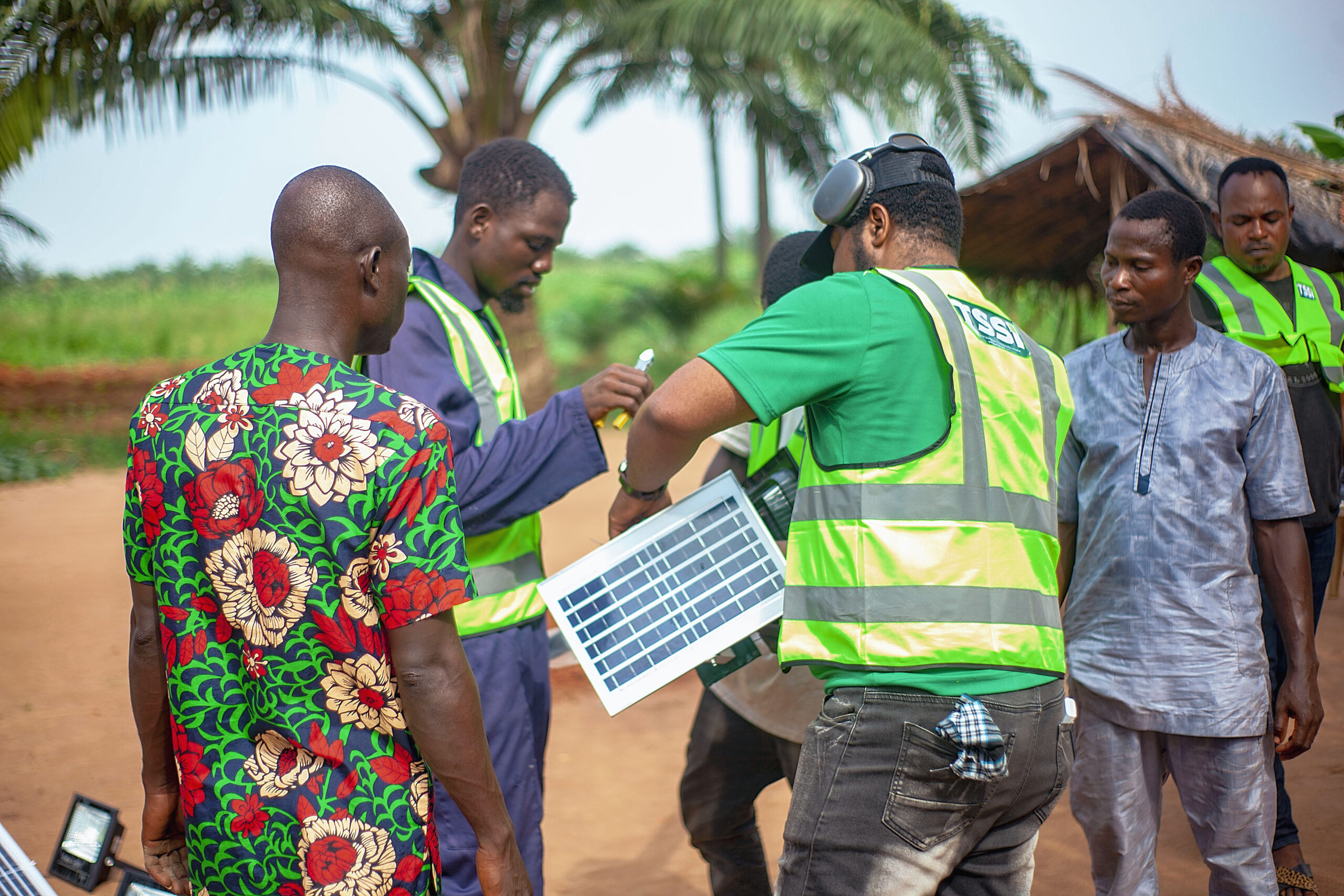
Through our Light Up September campaign and other solar installation projects across Ogun State and beyond, we’ve documented compelling evidence of how illumination leads to safer, more prosperous communities. Here are 15 proven ways solar street lights reduce crime in underserved areas.
1. Increased Natural Surveillance
Criminologists call it “eyes on the street.” When areas are well-lit, residents can see what’s happening in public spaces. This natural surveillance makes it much harder for criminals to operate undetected. In communities where we’ve installed solar street lights, residents report feeling confident enough to look out their windows and monitor their neighborhoods.
Real Impact: In one Ogun State community, residents formed an informal watch network after solar lights were installed, simply because they could now see outside at night.
2. Enhanced Deterrence Effect
Criminals prefer to operate in darkness where they can’t be identified. Solar street lights eliminate this cover of darkness, creating a psychological deterrent. Would-be offenders know they’re more likely to be seen, recognized, and reported when areas are illuminated.
3. Extended Economic Activity Hours
When streets are lit, small businesses and market vendors can operate safely into the evening hours. This extended activity means more people on the streets during previously dangerous times, creating a natural crime prevention mechanism through increased foot traffic.
Community Testimony: “Before the solar lights, I had to close my shop by 6 PM. Now I can stay open until 9 PM, and there are always people around buying things. Criminals don’t come where there are crowds.” – Mrs. Adebayo, market vendor
4. Improved Police Visibility and Response
Law enforcement officers can patrol more effectively in well-lit areas. They can spot suspicious activity from a distance and respond more quickly to incidents. Solar lights also make it easier for community members to identify and report crimes to authorities.
5. Reduced Fear of Crime
The perception of safety is nearly as important as actual safety. When people feel secure, they use public spaces more, strengthening community bonds. Solar street lights reduce the fear that keeps people isolated in their homes after dark.
Studies in our project areas show that when people feel safer, they’re more likely to intervene in or report suspicious activities, creating a community-wide crime prevention network.
6. Protection of Vulnerable Groups
Women, children, and elderly residents are disproportionately affected by crime in dark areas. Solar street lights create safer passage for these vulnerable groups, allowing them to travel for work, education, or emergencies without excessive risk.
Impact Story: Young women in one community reported they can now attend evening adult education classes because the path to the community center is well-lit and feels safe.
7. Prevention of Gender-Based Violence
Darkness provides cover for perpetrators of sexual assault and harassment. Well-lit pathways, particularly along routes women use regularly, significantly reduce opportunities for such crimes.
Our research in project communities shows a marked decrease in reported incidents of harassment and assault in areas with solar street lighting, with women reporting feeling empowered to move more freely.
8. Elimination of Dark Spots and Hiding Places
Every community has areas where criminals can hide and ambush victims. Solar street lights eliminate these dangerous dark spots, leaving nowhere for would-be attackers to conceal themselves.
Strategic placement of solar lights along pathways, near public facilities, and in previously problematic areas transforms these danger zones into safe spaces.
9. Increased Property Values and Community Pride
When crime decreases, property values increase. Residents take more pride in their neighborhoods, maintaining them better. This visible care signals that the community is organized and vigilant, further deterring criminal activity.
Communities with our solar installations report increased home maintenance, cleaner streets, and a stronger sense of collective responsibility.
10. Better Identification of Suspects
When crimes do occur in well-lit areas, witnesses can provide better descriptions of suspects and vehicles. This improves arrest rates and creates a deterrent effect as criminals realize they’re more likely to be caught.
Solar lights with motion sensors provide particularly good illumination for CCTV cameras in communities that have them, dramatically improving footage quality for investigations.
11. Reduction in Drug-Related Activities
Dark corners and unlit areas often become sites for drug dealing and use. Solar street lights eliminate these hidden spaces, forcing such activities into the open where they’re more easily detected and deterred.
12. Enhanced Emergency Response
During emergencies, every second counts. Solar street lights enable faster emergency response from police, fire services, and medical personnel who can navigate more quickly and safely through illuminated streets. Residents can also evacuate more safely during emergencies when pathways are lit, reducing injury and panic.
13. Community Gathering and Social Cohesion
Well-lit public spaces become venues for evening gatherings, community meetings, and social activities. This increased social interaction strengthens community bonds and informal social control mechanisms that naturally prevent crime.
Community Example: One village now holds weekly evening meetings in their central square since solar lights were installed. This regular gathering has become a space for addressing community issues, including safety concerns.
14. Reduced Opportunity for Vandalism
Vandals prefer to work unseen. Solar street lights make such destructive activities highly visible, reducing incidents of property damage, graffiti, and destruction of public facilities.
Interestingly, the solar lights themselves are rarely vandalized, as communities quickly develop a sense of ownership and protection over these valuable assets.
15. Support for Community Policing Initiatives
Solar lights enable and enhance community policing efforts. Volunteer patrol groups can operate more effectively, youth watch programs become feasible, and residents can participate in neighborhood security without putting themselves at excessive risk.
The visibility created by solar lighting allows community members to play an active role in crime prevention without formal law enforcement training.
The Ripple Effect: Beyond Crime Reduction
While crime reduction is significant, the impact of solar street lights extends far beyond safety statistics. We’ve observed:
- Children doing homework under street lights when homes lack electricity
- Evening markets emerging, creating economic opportunities
- Increased school attendance as students feel safer traveling early and late
- Improved health outcomes as pregnant women feel comfortable seeking nighttime medical care
- Stronger community identity and collective efficacy
Why Solar? The Sustainability Advantage
Traditional street lighting requires expensive grid infrastructure that many underserved communities lack. Even where grids exist, unreliable power and high costs make conventional lighting impractical.
Solar street lights offer:
- Independence from unreliable grids: They work regardless of power outages
- Zero operating costs: No electricity bills for struggling communities
- Environmental benefits: Clean energy reducing carbon footprint
- Easy installation: No complex wiring or infrastructure needed
- Long lifespan: 5-10 years of maintenance-free operation
- Scalability: Can start small and expand as resources allow
Implementation Best Practices
Based on our experience installing solar street lights across multiple communities, we recommend:
- Community consultation: Let residents identify the most dangerous areas needing illumination
- Strategic placement: Focus on pathways, gathering areas, and previously problematic zones
- Quality equipment: Invest in durable lights suitable for local weather conditions
- Community ownership: Train local technicians for basic maintenance
- Gender perspective: Specifically consider routes women use for work, water collection, and market access
- Integration with other safety initiatives: Combine lighting with community policing and women’s empowerment programs
Measuring Impact: Our Light Up September Results
In our recent Light Up September campaign, we installed several solar street lights across three Ogun State communities. Six months later:
- Reported crime incidents decreased
- 75% of residents reported feeling “much safer” at night
- Evening economic activity increased by 65%
- Women’s mobility after dark increased by 80%
- Community meetings and social gatherings increased by 90%
The Path Forward
As we expand our solar street lighting projects, we’re committed to documenting and sharing these crime reduction impacts. Every community deserves to feel safe after dark, and solar technology makes this achievable even in areas without reliable electricity infrastructure.
At TSSI, we believe that safety is a foundation for all other development. When people feel secure, they invest in education, start businesses, participate in community life, and build the future they envision.
How You Can Help
Support our work:
- Donate to fund solar street lights in underserved communities
- Volunteer for installation and community education projects
- Sponsor a street light in honor or memory of someone
- Share this article to raise awareness
For communities interested in solar street lighting:
- Contact us for needs assessment and project planning
- Explore partnership opportunities
- Learn about our training programs for local technicians
Together, we can illuminate communities and create safer spaces for all.
About Technology for Sustainability and Safety Initiative (TSSI)
TSSI empowers communities through innovative technological solutions. Our solar-powered projects and safety initiatives address critical needs in underserved areas across Nigeria. Learn more at techssi.org or contact us at [email protected]
#SolarEnergy #CommunitySafety #CrimePrevention #SustainableDevelopment #Nigeria #SolarStreetLights #WomensSafety #CommunityDevelopment

Light Up September Campaign: How We Illuminated 3 Communities in Ogun State

15 Ways Solar Street Lights Reduce Crime in Underserved Communities